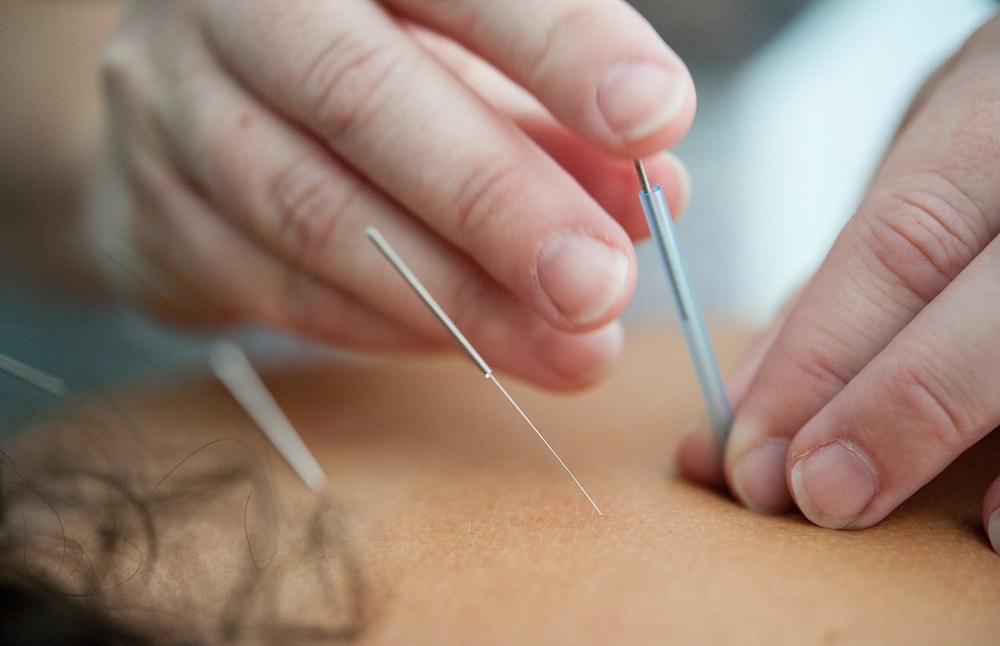
What is Dry Needling?
Dry Needling involves inserting a thin filament needle into specific soft tissues (such as muscle “trigger points,” fascia, tendons, and ligaments) to stimulate the healing process. The result is pain relief and the restoration of healthy muscle function.
Request an AppointmentWhat is a “trigger point”?
A “trigger point” is an overactive, irritable spot in a muscle, often accompanied by a palpable nodule or “knot.” This area is tender to the touch and can cause pain that radiates to other areas in predictable patterns.
Does it hurt?
Inserting the needle into a healthy muscle typically causes little discomfort. However, if the muscle is sensitive, shortened, or contains active trigger points, you may feel a sensation similar to a muscle cramp (the “twitch” response).
What is the difference between Dry Needling and Acupuncture?
While both techniques use the same tool — a solid needle filament — the philosophy and objectives behind dry needling are rooted in Western Neuroanatomy. Dry needling, performed by physical therapists, is based on modern scientific research of the musculoskeletal and nervous systems, unlike acupuncture, which stems from ancient Chinese medicine and its principles.
Who can benefit from Dry Needling?
Dry needling can help almost anyone experiencing various pain issues, including but not limited to:
- Acute/Chronic injuries
- Headaches
- Neck/Back pain
- Tendinitis
- Muscle spasms
- Sciatica
- Hip/Knee pain
- Muscle strains
- Fibromyalgia
- Tennis/Golfer’s Elbow
- Patellofemoral Pain Syndrome (PFPS)
- Overuse injuries
Are there any side effects to Dry Needling?
Side effects are generally mild and may include slight muscle soreness or skin bruising.
Is Dry Needling covered by my health insurance?
In most cases, dry needling is offered as a fee-for-service or cash-based treatment and may not be covered by insurance.